
I was sitting around with my brothers and sisters, telling stories from our childhood. My brother remembered a time he was trying to get my sister Stephanie in trouble. We were on a long car trip and there was nothing else to do. He hollered up to my mom in the front seat, “Mom, Stephanie only brushes her teeth once a year!” My indignant little sister quickly replied, “Nuh uh, I brush them five times!” She was really mad when we all laughed. So to this day, in honor of my little sister Stephanie, every year he makes a resolution to brush his teeth at least five times a year. You know five cakes is a lot more than one cake, but when the dentist expects you to brush twice a day, or 730 times a year, five times a year is really not that much better than one time a year. Numbers need context in order to make sense. As a parent, your job is to help your child use numbers in the real world so that math in school will make more sense.
“In First Grade, children learn to count to 120.”
In pre-k your kid should have learned the numbers 1 – 20. In kindergarten they 1 – 100. In first grade, they need to know up to 120. That shouldn’t be too hard, right? Well, maybe. The truth is, there are soe hurdles to learning numbers past 100. We commonly stop at 100, so sometimes kids are just not familiar with the numbers past 100. You are adding a whole new digit and it can be confusing because now you have a zero in the middle. So, although it might be easy to say numbers past 100, in order to understand three-digit numbers, kids will need to understand place value.
The easiest part of counting past 100 is going to be rote counting, or saying the numbers in order. Your child will probably notice the pattern of numbers that they learned when they were in preschool is just repeating. They might still pause and think when they transition over the nines, like 99, 109, 119. They might also struggle with those tricky teens again because the words are different like 111 instead of one hundred and tenty one, but they will probably be able to use their background knowledge of numbers to figure this out pretty quickly. However, reading and writing numbers might be a bit more difficult. Often, first graders want to write 100 and one the way they say it. In other words, they might mistakenly write a one, two zeros and another 1, which is actually 1001, not 1001.
“They need to understand place value.”
They need to understand place value, which just means that each digit represents a quantity based on where it is. They have probably already learned that the 1 in 16 represents one group of ten items instead of just one item. And in the number 26, the two represents two groups of ten items, not just two items and so on. Groups of numbers become very important. If my kids are confused, I like to talk about packages. For example, one package of candy that contains ten pieces. If I have two packages of candy, I have twenty pieces. If you listened to episode 22 about pennies, you might remember that I also like to use coins to help kids learn place value. It helps if kids learn that ten pennies are equal to one dime. Ten dimes can be traded for one dollar, which is 100 cents. By the way, they are canceling the penny, so run to the bank and get at least two rolls before they are gone. You can pass them down to your kids as math tools. Coins can be used to extend place value understanding past one hundred, and in 4th grade they are really helpful when learning decimals.
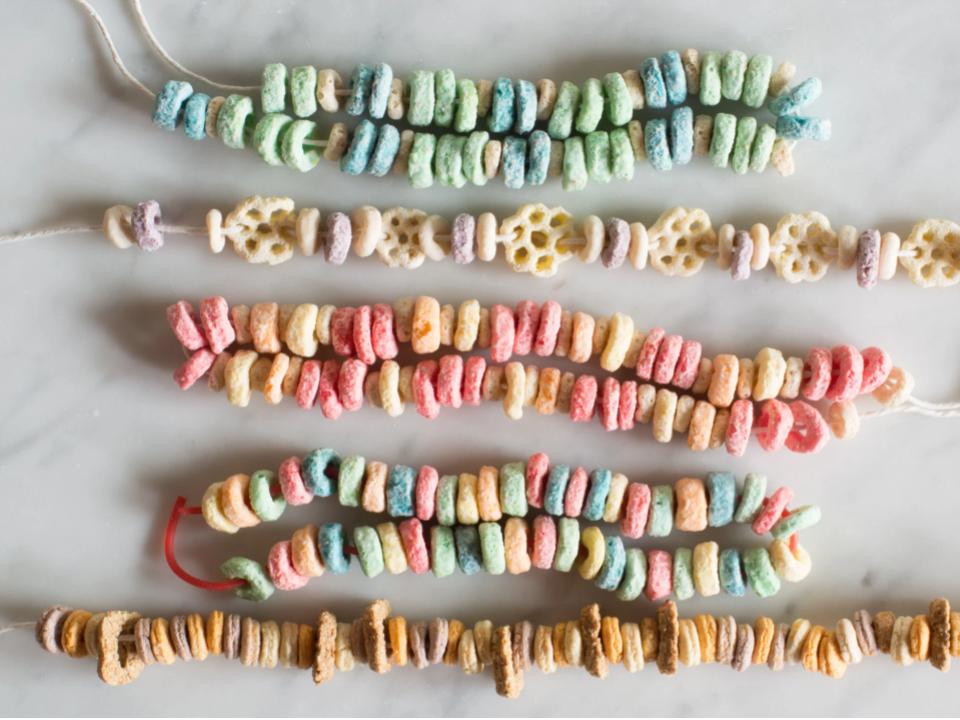
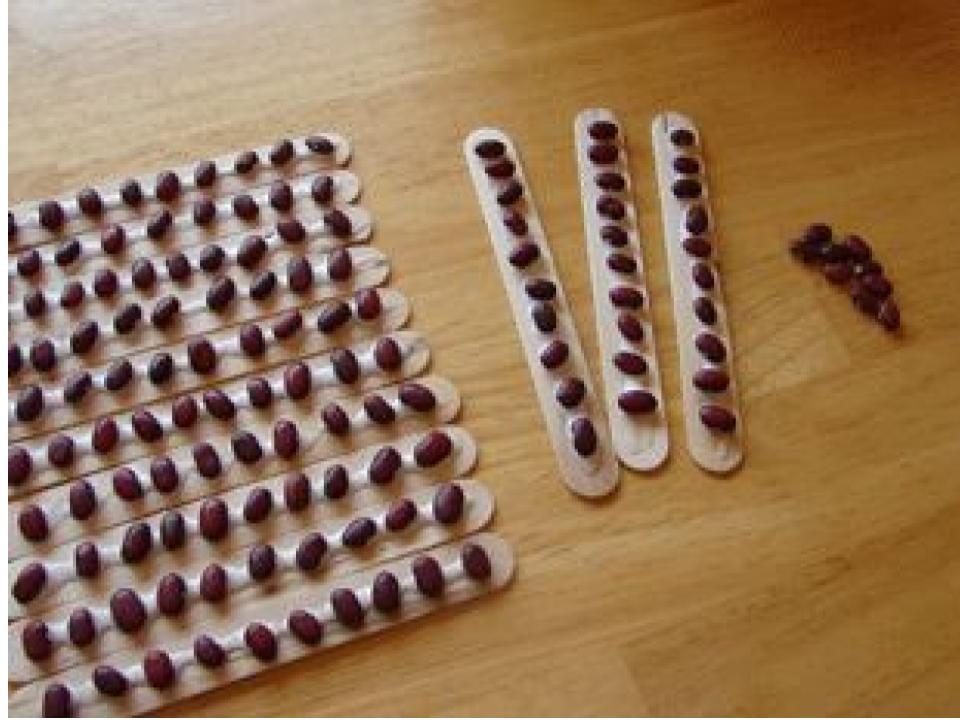
candy necklaces from supermakeit.com & bean sticks from mckinsellaprojects
Another easy math tool you can make to learn about place value using beans and popsicle sticks. Each bean is worth one. You can help your child make tens by gluing ten beans to a popsicle stick. Then you glue ten popsicle sticks together on a piece of paper to make a block of 100. They are kind of fun to make and you can keep them in the junk drawer for a bit to help with homework.
A tastier, but less healthy idea would be to use candy. You could put 10 gummy rings on a stick of licorice. You could then string the licorices together to make hundreds. I have also used marshmallows and pretzel sticks stuck in a muffin. It is the same idea. You just want your child to start understanding the groupings of ten. It is important that when you are doing these things you are writing the numbers down on a piece of scratch paper so they can be connecting their sticks or licorice groups to the digits on the page.
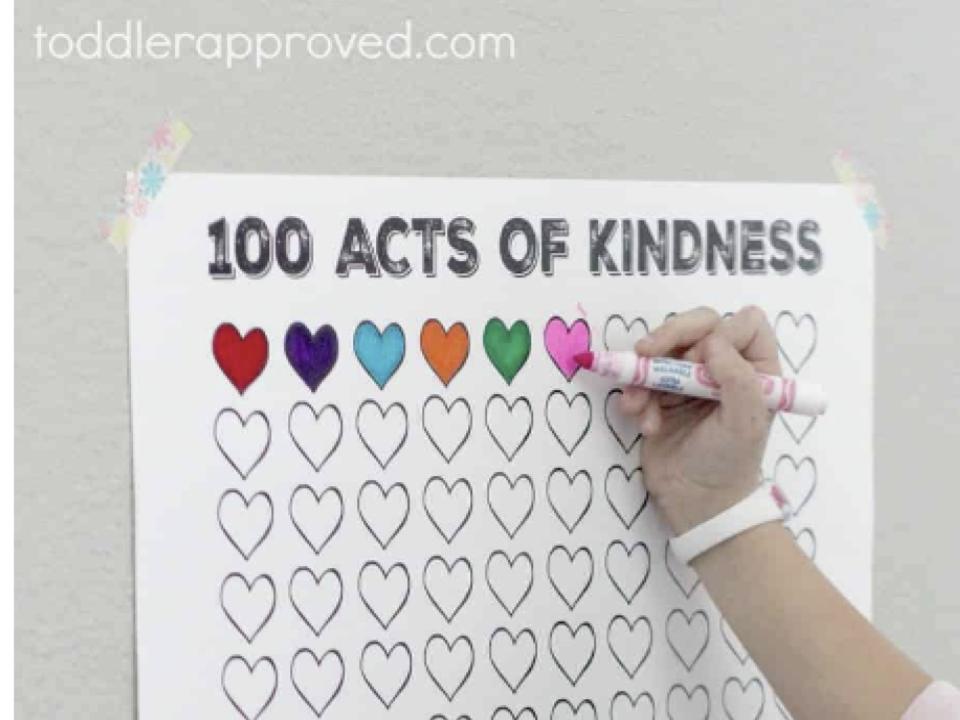
Making place value groups is fun to do, but it requires a bit of preparation, so it isn’t something you would do very often. However, you do need repetition to help them remember what they learned by doing the activity. I found a cute idea at teaching expertise.com. They made a hundred’s chart with hearts and labeled it 100 acts of kindness. Since we are talking about 120 this year, I made you guys a printable chart with 120 hearts. I will post it on my website and leave a link in the show notes. You will want to kick off your 120 acts of kindness by talking to your family about the importance of being kind and then hang the chart on the refrigerator. Whenever someone does something nice, or notices someone else doing something nice, they can color in the next heart. Make sure everyone knows to color the hearts in order. Just looking at the chart on the fridge might help kids learn the numbers, but if you talk about the chart at dinner and people can explain why they colored in the hearts, you will get more bang for your buck. You could say something like, “Yesterday we had 24 hearts colored and today there were three more. Now we have 27. Does the person who colored them want to share the kindness they saw or did?” I liked how this idea teaches social-emotional skills and also reinforces numbers.
It really helps when you support your child’s number reasoning at home with activities like counting money, making 100’s crafts and snacks and working with charts that show numbers up to 120. You will be helping your child build their number sense because you will be connecting what they learn at school to real-world situations, that is where home-learning really helps. These activities will create situations that help your child be able to visualize what large numbers look like and what they mean. Sometimes, being able to talk about quantities one on one with a parent can make all the difference in the world. So plan a fun number activity for the near future, but for now, it’s just put down your phone and go play with your child.
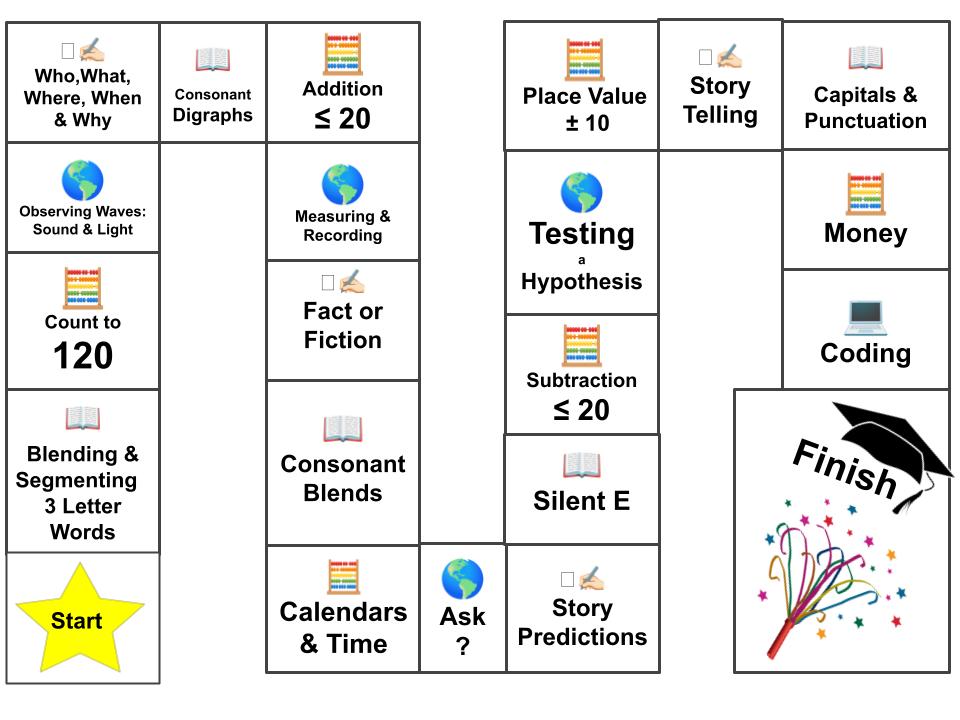
First Grade Journey (Game Board)
 Public School Success
Leave a comment