
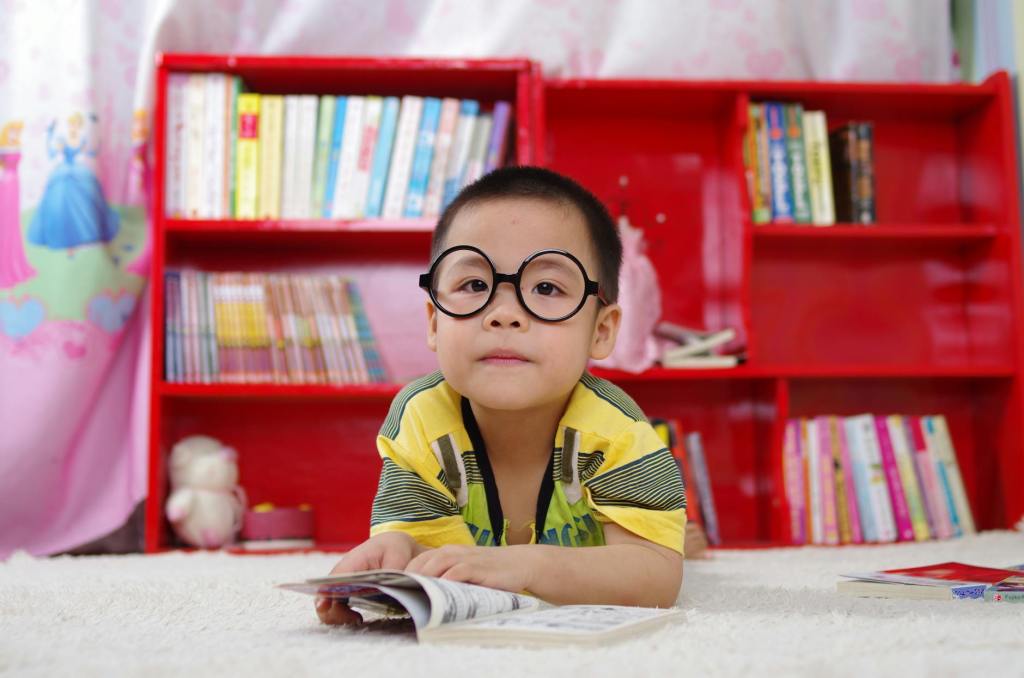
My second child, Quincy, loved to listen to bedtime stories at night. We also soon discovered that the library had CDs that we could check out: this was before streaming. We were still listening to CDs. I’m getting so old. Anyway, we could get compact discs that would read books out loud to the kids when I was busy doing other work around the house. This quickly became a favorite activity. They liked to listen to stories while doing crafts or cleaning their room. At parent- teacher conferences in second grade, we were told that their reading comprehension scores were much higher than the reading fluency. I wondered aloud if it was because they listened to books on tape instead of reading words on a page. Jackson, sitting next to me and listening in, said, “yeah, Quincy is a tapeworm.” He meant a bookworm who listened to books on tape, but a tapeworm has a very different connotation than a bookworm.
Bedtime Stories Build Foundational Skills
It is a common myth that simply reading bedtime stories with your child will magically make them a skilled reader. There are some children that might pick it up this way, but children will need to learn to sound out the letters and blend the letter sounds together to make words in order to read. However, reading with them will build foundational skills, help them develop an interest in reading, and it is an opportunity to work on supporting their reading development. Some of the foundational skills are just about how books work. For example, one kindergarten standard or goal is for kids to know how to open a book and turn the pages. This seems obvious, but a child who isn’t familiar with books won’t know whether you turn the left page or the right page. Kids who have people read to them regularly will have enough experience that this comes naturally. Many Kids like to turn the pages themselves. One of Yogi’s favorite books is the classic “There’s a monster at the end of this book.” Where Grover begs the reader not to turn the page and Yogi loves to disobey him and see the consequences of turning the page as he gets closer and closer to the end.
And it isn’t just turning pages, kids also need to know that you read the words on the page from left to right. An easy way to reinforce this idea is to move your finger under the words as you read them. This also helps them see that each little group of letters is a word. Another easy way to help your child understand this is to have your child count the words on the first page. This can help you start the conversation about the idea that words are clusters of letters separated by spaces. You are not going to want to do this too often. After counting the words on the first page, you read the story like you normally would. This simple activity helps bring attention to the fact that it is words that are telling you what is happening, not just the pictures.
Another night, instead of counting words, you might try to count how many capital letters are on the first page. By the end of kindergarten, your child should be able to recognize all the upper and lower case letters. They should also know what sounds those letters make, at least the most common sounds.
Eventually, as the school year progresses, you can have your child help you read some words. To start out, you can share the responsibility of reading a word. Maybe the first word of each page they can say the sound of the first letter and you finish out the word. They should know that the vowels are special letters that have a long and a short vowel sound. By now you may have forgotten what those are. The long vowel sounds exactly like the letter name. For example, the long vowel sound of a is aye and the short vowel sound is a.
By the end of kindergarten, they should be able to read short, three-letter words called cvc words. CVC words are words that have a consonant, then a vowel, and then a consonant. For example, B-A-T. It starts with the consonant b and ends with the consonant t. In the middle, the vowel of a cvc word uses its short vowel sound a. When you feel like your child is really comfortable with all the letter sounds, you might start looking for cvc words in your story and help them sound them out.
You might run into problems if the first word is “the” because it doesn’t make the sound “t” but “the” is such a common word that you might just be able to teach your kid that t-h-e is the word the and have them read the word the when you find it on the page. It becomes a game for them to look for all the “the”s.The exceptions to rules will help your child start learning that sometimes letters make more than one sound.
It is really hard to find a whole story made up of words that a kindergartener can read and they are very boring. When a teacher does start sending home decodable texts made up of words kids can read, I usually do them as homework before dinner instead of during story time. In fact, don’t make the story time all about these games and things I just told you about. Only do a little on the first page and don’t let it ruin the enjoyment of the story.
Some of the reading standards have more to do with understanding the story itself than they do with actually reading the words. Teachers separate reading skills into two groups, called fluency and comprehension. Fluency is how well they read the words and comprehension is how well they understand the story. Eventually these skills intertwine and kids who are more fluent will have an easier time comprehending what they are reading because they won’t spend so much time thinking about sounding it out and they can give more energy to thinking about what the words are saying. But just like Quincy, my little tapeworm, some kids can understand what is going on even if they struggle with fluency because they have a lot of experience with stories. One way to encourage reading comprehension is to have conversations about the story while you are reading.
Sometimes at night you are tired and you just want to get the kids in bed and the conversations seem like they are dragging story time out for too long. But it’s important to have these conversations, even if you have to put a bookmark in the story and finish it up the next night because you ran out of time. Often kids will initiate these conversations by asking what words mean or wondering why the character did something. But if they don’t, you can pause and ask them questions to get the conversation going. You might ask, “What do you think Piggie is going to do next?” Having kids guess what might happen next helps them to compare their prediction to what really happens in the story. As they get older, and are reading by themselves, these conversations happen in their head, and eventually become almost subconscious, but good readers continue to participate in what they are reading. This is why some of us get lost in books. We feel like we are part of the story. Research shows that strong readers do this type of interacting with the story in their heads whereas poor readers do not. I don’t know if that is because poor readers are struggling to figure out the words and don’t have any brain power left to think about the story, but I suspect that thinking about the story also helps children to stay focused.
My kids also liked to talk about the illustrations. They look for clues about the stories in the pictures. Yogi is especially interested in maps and graphs. Illustrations and graphics are an important type of text that your child will use to gather information in the modern world. I think sometimes as parents we forget that. Non-fiction books for kids often ask questions at the beginning. It is a good idea to discuss these questions with your child and then read on to find out more. It makes it much more interactive and kids love to be a part of things rather than just passively listening. As they grow older and read on their own, these internal dialogues take place in their minds and eventually become almost subconscious, but skilled readers continue to involve themselves in the material. This is why some of us get lost in books. We feel like we are part of the story.
So parents, I know you are super busy. But if you can take just 15 minutes a day to sit down and read with your child, it will provide so many opportunities to reinforce the reading skills they are learning at school. It will also offer opportunities to have interesting conversations that will help you get to know them as a person that is separate and distinct from you. Each positive interaction like this will help strengthen your relationship and your love for each other. Because what kids want most is to spend time with their parents and it means a lot to them when you listen to what they have to say. So now it’s time to put down your phone and go share a book with your kid.
 Public School Success
Leave a comment