
With Miriam Brown, Evelynn Brown and Erin Coppin
Evelynn: One of my friends was talking about how their mom was cleaning their room and kept moving stuff around. And I said, What? My mom never cleaned my room. She just stood there and watched. She used to make me play this game called Bend Down, Pick It Up, where I had to bend down, pick something up and then put it right away. It wasn’t very fun.
Miriam: Okay. Some of my games were not very fun at all. Cut me some slack. I didn’t have Pinterest at the time.
Introduction
Hello. I’m your host, Miriam Brown. In additionto my teaching certificate, I have a bachelor’s degree in psychology and a master’s in curriculum instruction. I spent the last decade as a public school teacher, and I want to give you insider tips on how to help your child do well in a system that might otherwise fail them. This is my last episode for the summer. I’m going to spend some time working on the Spanish version of this podcast, and I’ll be back in September with more ideas about how to help your child get the most out of their public school education. But I wanted to end this season with one of the most important things you can teach your child before they start school. So today I’m going to talk about listening and following directions.
Listening is an Important Life Skill
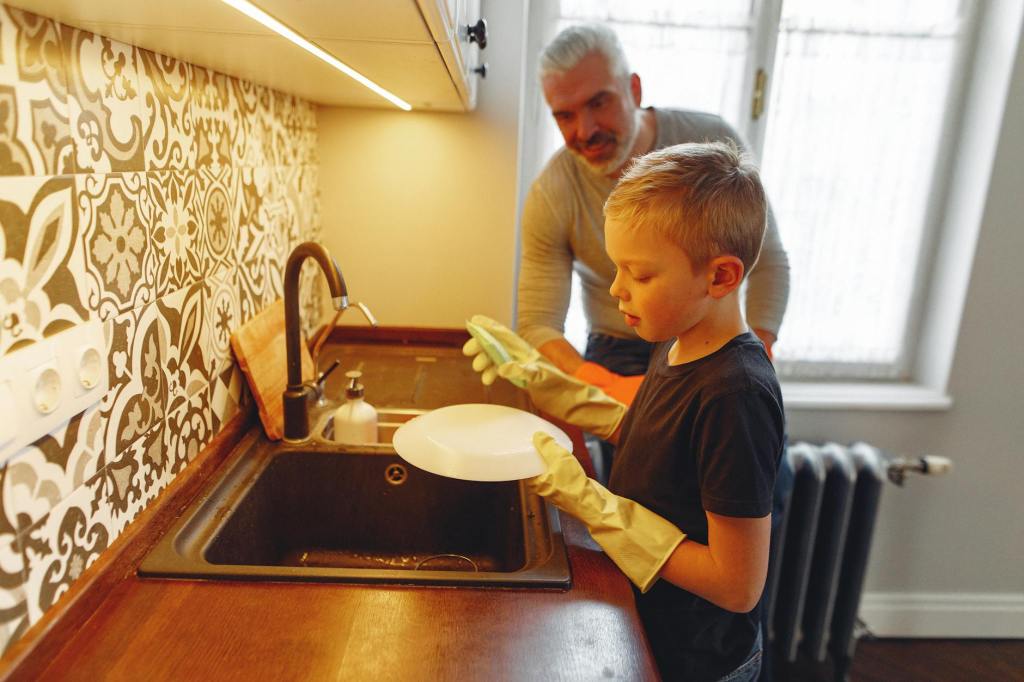
Miriam: My goal as a mom was to teach my kids how to LIFE. Learning how to listen and follow directions not only helps kids do better in school, it will help them later in the workplace and even in their relationships. First, let’s talk about following directions and then talk more about listening with empathy. Some of my kids were good at following directions from the start, and others struggled for various reasons. I usually focused on teaching them how to follow directions by doing chores. I started them out doing chores really early, but I started really small. When they were two years old, they would have the job of bringing the spoons from the table to the dishwasher after meals. Then when they got good at that, they could do the spoons and the forks, Then the spoons and the forks and the butter knives and so on. They were usually clearing the table completely by the age of five. They gained a sense of competence and importance by helping out. But it wasn’t always easy, as you can tell from Evelyn’s story about the boring game of Bend Down and Pick It Up in the intro. It took a lot of time; I remember one chore brushing their teeth that I got so frustrated about. Jackson was 11, and I told him to go brush his teeth to get ready for bed, and he just didn’t want to do it. After repeated reminders, I just flipped out. I said, Jackson, how old are you? “I’m eleven” How many days are there in a year? “365”. So how many days have you been alive? I made him get a piece of paper and do the math. “4015”. Then I said, How many times a day do we brush our teeth? “Twice”. So how many times in your life have I told you to brush your teeth? “8030”. So how long until you learn to do it on your own? Will, I have to ask you 10,000 more times. Will, I have to follow you to college to make sure you brush your teeth. That thought made him shudder. He did not want me to follow him to college. I had already followed him to elementary school to be his teacher. And that was bad enough. I never had to remind him to brush his teeth again. So parents, that is how math can help you in your daily life.
Learning Differences Can Make Listening Hard
Miriam: So what is it that makes it so hard for kids to listen and follow directions? Let’s explore all the things that are happening in a child’s brain for them to listen and follow directions. In order to follow instructions, a child has to know enough words to understand what you ask them to do. If I ask a two-year-old to clear the table, they might not know what clear is, and they might not understand what you want them to do to the table. But if you show them a spoon and say, this is a spoon, can you take this spoon and put it here in the dishwasher as you show them the action you want them to do? They are learning the words spoon and dishwasher, not to mention put and in. So make sure you are giving instructions that are clear and simple. One of the hardest parts about getting a child to listen to you is that If they’re focused on doing something else, they might not even register your voice. One good suggestion is to use eye contact instead of repeating yourself. Here’s a clip from my interview with Erin Coppin about that.
Erin: So when they were little, I had to understand that they didn’t have the capacity to follow multi-step directions, so I had to give them one at a time because a lot of times we’d be cleaning and I’d be like, okay, go pick up this and put that away and then come back do this and this isn’t this. And I had to learn, okay, put this away, come back. But this away, come back. And even today, I still sometimes have to do that, like, okay, one at a time. If I start giving them too many instructions, then they start to get overwhelmed. Don’t want to listen. The other thing that I had to do was actually take a step with myself and make sure I actually got their attention before I gave an instruction. So if they’re in the middle of doing something and I tell them to go do something, they may not have actually paid attention and heard. And so I have to stop and get their attention, say their name or have some sort of clue that they’re actually ready to listen. As they’ve gotten older, the more that we did a single instruction at a time, they have learned and now I can say, okay, go do this, this, this, and then come back. But I also still have to be cognizant of not overwhelming them with instructions.
Miriam: Sometimes if you give a lot of instructions, your family learns to tune you out. So you’ve got to pick your battles. I saw this great meme the other day that had a Viking that said, “Pick your battles. Pick fewer battles than that. But some battles back. That’s still too many battles.” It made me laugh because there’s so much for kids to learn that sometimes it can be pretty overwhelming. So especially at first, it might be a good idea to focus on teaching them just one skill. With my son Jackson, I started by teaching him to help with the dinner cleanup. You might choose to help them learn to pick up their toys after they play with them or to get dressed in the morning. But don’t try to teach all of those things at once.
Central Auditory Processing Disorder
Another thing to keep in mind is that some children might struggle with auditory processing, even if your ears work. Your brain might struggle to connect what you hear and analyze it. According to Kidshealth.org, three to five percent of kids struggle with central auditory processing disorder. It’s another brain difference that can make it difficult for your child to listen and follow directions. With Central Auditory Processing disorder, kids can hear perfectly fine, but their brains struggle to understand and analyze the words.
Attention Deficit Hyperactivity Disorder
ADHD is another brain difference that can make it hard for your child to listen and follow directions. This is because of difficulty paying attention or perhaps lack of working memory. If you remember the Disney movie Inside Out, you might imagine the lighted balls of information that the emotion characters work with. Before they’re sent down to long-term memory, the balls of information are upstairs in the workspace. Working memory refers to how many pieces of information you can handle at once. All of us are limited by our working memory, but some more than others. Young children do not have as much space in their working memory as adults. Your working memory develops over time, so you need to be patient. One way to take some of the load off their working memory is to develop routines. Erin had some really good ideas about developing routines with young children or children that are struggling to learn to follow instructions,
Picture List Routines
Erin: The morning is something that my daughter really struggles with. Getting up, getting ready, and getting out the door on time. The more that she has a routine-This is the time you get up. This is what you do first, second, third.- That really helps. Like when she was little, she had pictures that were numbered- get dressed, eat breakfast, brush your teeth, brush your hair, put on your shoes and socks, get your lunch.-So she had a visual step-by-step list of the instructions. But yeah, we’ve had to work a lot, and she still is not perfect and she misses the bus more often than she should. But we keep working on it, and she is better than she has been, and there’s less drama around getting out the door.
Miriam: These strategies will also work with children who suffer from central auditory processing disorder. I know I just made the whole thing sound complicated and difficult, but I want you to get an understanding of why some kids may struggle with listening. They’re not just trying to make you mad. And hopefully this will help you have a little more patience.
But don’t give up on giving instructions just because it’s hard for your child. It is vital that your child get better and better at this skill, and working on it at home will help them at school and later in life. Here are a few games that you can play that make it fun to practice their ability to follow directions:
Simon Says
Do you remember the old game Simon says? This easy game involves choosing one person to be “it” or “Simon”. Simon gives instructions preceded by the words. “Simon says Jump”, for example. Then every once in a while, Simon will give an instruction without saying, Simon says. And if the others do it, they’re out.
Red Light Green Light
Another fun one is Red Light, Green Light. The person who is it stands far from the others and turns their back and says Green light. Everyone moves toward the person until they turn around and say Red light. Anyone who doesn’t stop immediately has to go back to the beginning. This helps your child develop another important part of their brain involved in listening and following directions, the frontal lobe, which is in charge of their impulse control. Now, listening to instructions is only one aspect of listening.
Listening and Empathy
Another aspect is listening to understand other people’s emotions, thoughts and ideas. It’s good to reflect with your child often about other people’s feelings so they will start thinking about it. Talking about other people’s feelings is one way to teach empathy. But the best way is to teach it by modeling it for your child. This is hard for me because it’s not really in my nature. My husband is the “good listener” in our family. But I once read a very good book called How to Talk. So kids Will Listen and Listen So They Will Talk by Adele Faber and Elaine Mazlish. It’s been a while since I’ve read it and it’s an older book, so there might be some older traditions in it, but it has some really great ideas. One I shared with my friend Elizabeth was when Harvey really wanted an iPad and she didn’t want to get him one. He kept begging, and it was frustrating. So I told her about giving your child their wish in fantasy instead of just saying, No, you don’t need an iPad. You could say, If I had a magic wand, I would conjure up an iPad and a Spider-Man case to go on it. Then the kid might add something else. They want you to conjure with your magic wand, and you happily talk about all the things that you could have, if only magic were real. Yogi and I do a variation of this called If I Had All the Money in the World. It helps kids feel heard and validated. They know deep down inside that you can’t give them everything they want, but somehow it feels good to know that you care about their wishes. That is just one of the great suggestions the book gives for learning to show more empathy for your child without spoiling them. The premise of the book is so true that as you learn to listen to your child, they will become a better listener to you and to their teacher.
Anyway, I hope some of these ideas about helping your child to learn to become a good listener were helpful. Remember, teaching is a process, not an event. You should start early, start small, and keep working on it all throughout their childhood. It will be a skill they never thank you for, but it will serve them well throughout their life. So if you liked this episode, share it with a friend. And if you want to read the transcript or find references, you can find those on my new website. Public School Success dot com. Public school success is all one word. But for now, it’s time to put down your phone and go hang out with your kid.
References
Active Listening Games. (2023, February 17). Your Therapy Source. Retrieved July 18, 2024, from https://www.yourtherapysource.com/blog1/2023/02/17/active-listening-games-2/
Docter, P. (Director). (2015). Inside Out [Film]. Pixar Animation Studios.
Dunn, A. K., & Hall, K. E. (2017, January 24). Impaired Memory for Instructions in Children with Attention-Deficit Hyperactivity Disorder Is Improved by Action at Presentation and Recall. NCBI. Retrieved July 18, 2024, from https://www.ncbi.nlm.nih.gov/pmc/articles/PMC5258743/
Faber, A., & Mazlish, E. (2012). How to Talk So Kids Will Listen & Listen So Kids Will Talk. Scribner.
Red Light, Green Light | Super Simple Songs. (2018, July 26). YouTube. Retrieved July 18, 2024, from https://youtu.be/xoyEDrMDirA
Riegner, T. L., & Inverso, D. (n.d.). Auditory Processing Disorder (for Parents) | Nemours KidsHealth. Kids Health. Retrieved July 18, 2024, from https://kidshealth.org/en/parents/central-auditory.html
Shukla, P. (2019, August 15). Learn Simon Says Song for Children (Official Video) by Patty Shukla | Dance Song for Kids. YouTube. Retrieved July 18, 2024, from https://youtu.be/OkO8DaPIyXo
6 Fun Games to Improve Listening Skills at Home and School. (2020, February 20). Avondale Meadows Academy. Retrieved July 18, 2024, from https://avondalemeadowsacademy.com/6-fun-games-to-improve-listening-skills-at-home-and-school/
 Public School Success
Leave a comment